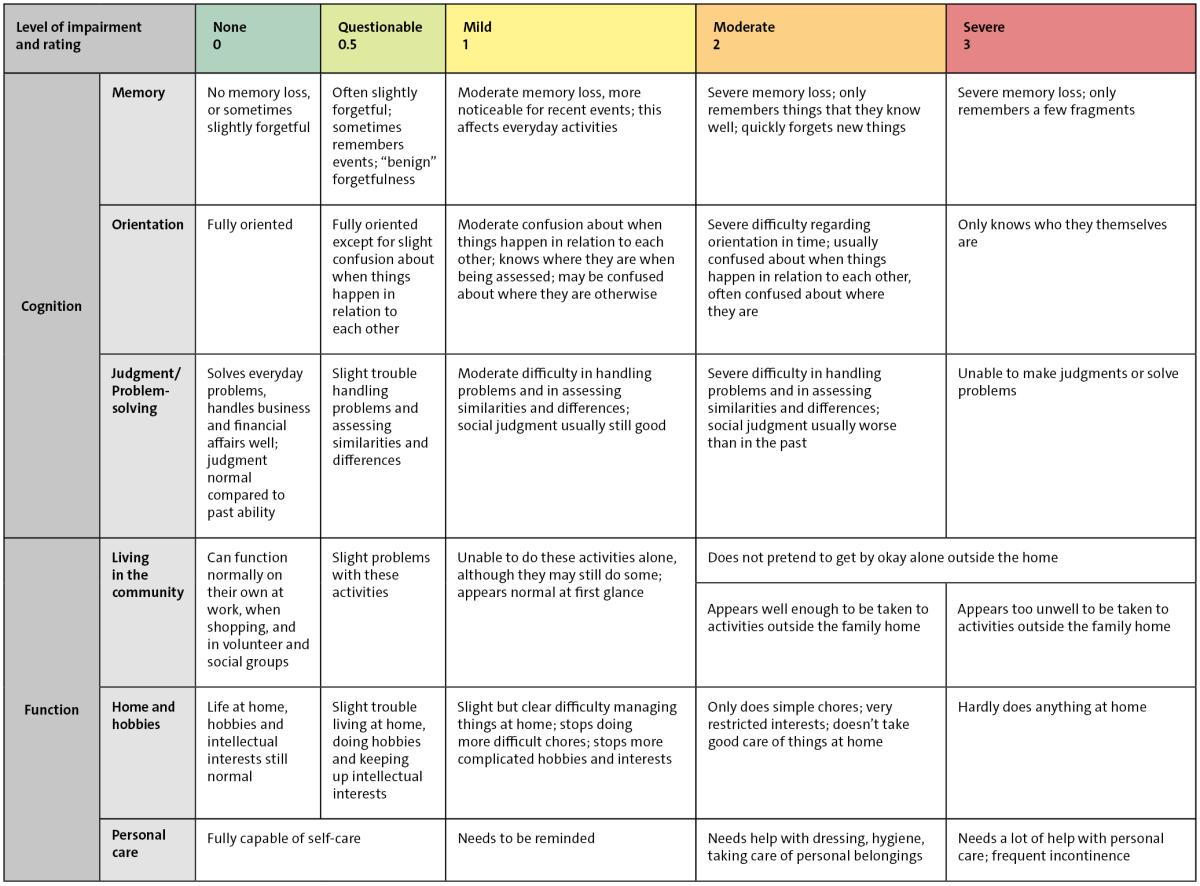
Categories covered by the CDR scale
Doctors use the CDR scale to find out whether a patient's memory and thinking skills have got worse and how that affects their independence in everyday life. The doctor asks the questions in a personal interview with the patient and someone the patient is close to. This can be a relative, a good friend or a caregiver, for example.
The interview takes about 30 minutes.
To assess the effects of Alzheimer's disease, the CDR scale contains various questions about the patient's thinking and memory skills (cognition) and their ability to cope in everyday life (function).
The questions on cognition relate to these three categories:
- Memory
- Orientation
- Judgment and problem-solving
The questions on function in everyday life relate to these three categories:
- Living in the community
- Home and hobbies
- Personal care