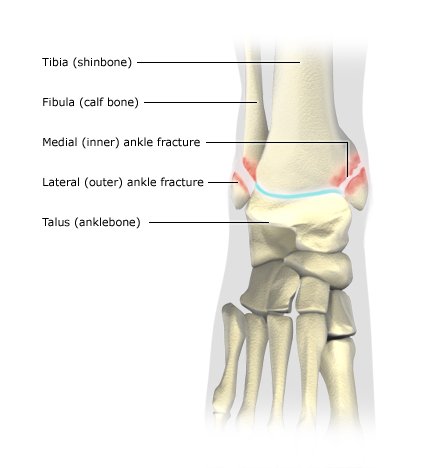
The foot and ankle are first immobilized (prevented from moving), elevated and cooled as needed. Immobilizing the joint (with a splint, for instance) helps to protect it and allow it to heal properly. If the bones have moved or slipped out of the joint, they can be put back into place by a doctor. Bandages, splints, braces and plaster casts are generally used for about six weeks.
After a while you can gradually start putting more strain on the joint and strengthening it. The point at which people are advised to start doing gentle exercises or physical therapy depends on how bad the injury is: Sometimes gentle exercises are already possible a few days after the injury or surgery, and sometimes they can only be done once the splint or plaster cast has has been taken off. Because the foot is immobilized at first, anti-thrombosis injections may be a good idea because immobility increases the risk of venous thrombosis.
Surgery isn't always necessary for ankle fractures. Whether or not it's needed depends on these factors:
- how severe the fracture is
- what part of the ankle is broken
- whether there's an open wound or break in the skin near the broken bone (an open fracture)
- whether blood vessels or nerves have been damaged
- whether the bone fragments have moved out of place
Screws or plates may be used during surgery to hold bone fragments in place. When the fracture has healed and the bones have grown back together, the screws and plates can often be removed, depending on the situation.
After surgery, the ankle is immobilized using a bandage, splint or plaster cast. Some bandages and splints are removable, making it possible to already start doing gentle exercises during the immobilization phase. Bandages and splints are considered medical aids ("Hilfsmittel") within the German health care system.