How is the heart rhythm regulated?
The heart is mainly made up of muscle cells. Most of these cells contract strongly as soon as they receive an electrical signal, and then relax again on their own.
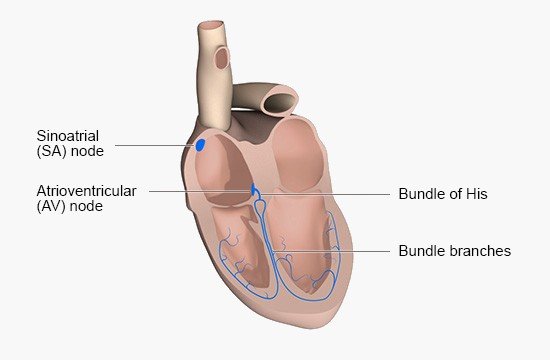
Special heart muscle cells ( pacemaker cells) send these signals. They set the pace of the heartbeat. These electrical signals are called “cardiac action potentials.”
The special heart muscle cells are also able to quickly pass on these signals. That’s important, to make sure that the muscle cells in the lower heart chambers contract (squeeze) at the same time. Only then is the heart strong enough to pump the blood throughout the whole body.
The cells that trigger and pass on the signals make up the electrical pathways in the heart (cardiac conduction system).