What do ear examinations involve?
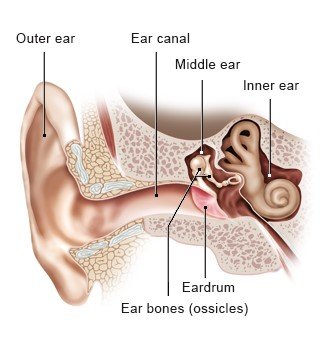
Ears are responsible for your sense of hearing and your sense of balance. You hear sounds because your ears pick up sound waves and turn them into electrical signals which travel along nerves to your brain. Your brain then “decodes” the signals, recognizes that they are sounds, and interprets the sounds. The organ of balance (the vestibular system) in the inner ear also sends signals to the brain, so the brain can track and interpret every movement and change in position.
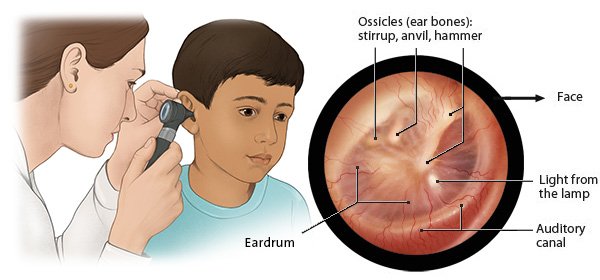
People who have hearing problems usually have an ear examination. In medicine, there are two main categories of hearing problems: Sensorineural hearing loss, where sounds and noises are not heard at all, or are heard too quietly. And conductive hearing loss, where the sound waves reaching the ear can't be passed on properly. Earache is another common reason for having an ear examination. The pain may be caused by a middle ear infection or an inflammation of the outer ear canal. But it may also come from problems in the jaw or in the neck area of the spine (the cervical spine).