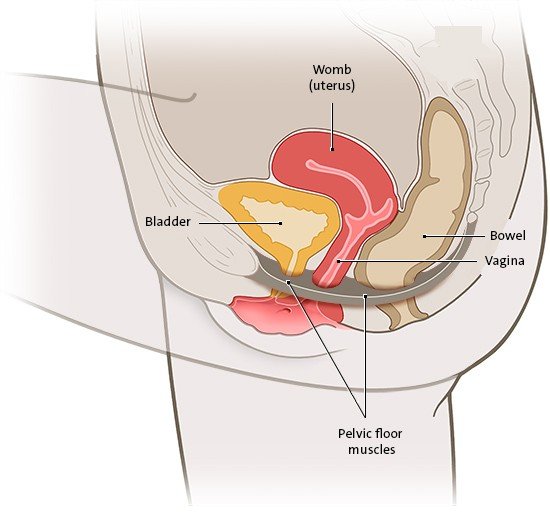
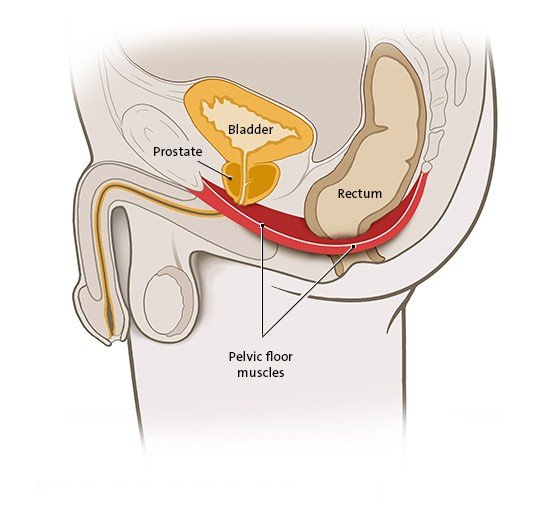
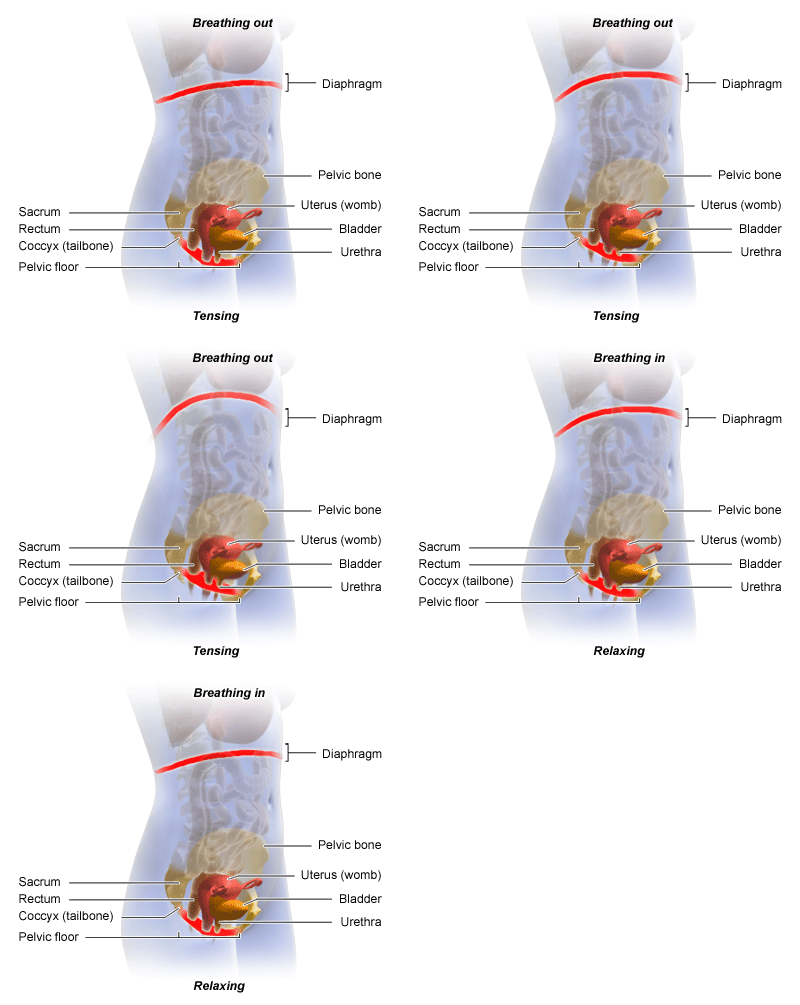
There are also simple things that you can do in everyday life to avoid straining your pelvic floor muscles too much. The main goal is to avoid putting pressure on your pelvic floor.
Standing up
If you are lying down and get up while keeping your upper body straight, your stomach muscles tense and push your pelvic floor down. You can reduce the pressure by rolling onto your side first, propping yourself up with your arms, and then getting up.
Posture
If your back is not straight, there is less tension in your pelvic floor and the organs in your abdomen are squashed together, so they push down on the pelvic floor. You can stop this from happening by keeping your back straight while sitting and walking.
Lifting objects
To reduce the strain on your pelvic floor when lifting things, bend your knees and keep your back straight when coming back up instead of keeping your legs straight and bending forward. It can also help to hold the object close to your body and tense your pelvic floor muscles.
Holding your breath when lifting heavy things stops the muscles in your back, stomach and pelvic floor from working together as well as they could. The muscles work better together if you carry on breathing.
Coughing and sneezing
Coughing or sneezing leads to a sudden increase in pressure in your abdomen. This can put strain on your pelvic floor if your upper body is bent forward. You can reduce the strain by looking up or over your shoulder while coughing or sneezing.
Abdominal exercises
Abdominal exercises like sit-ups put a lot of pressure on your abdomen. This can be a problem if you have a weak bladder, if you are pregnant, or if you have had a baby in the last few months. If any of those apply to you, you can talk to your doctor about perhaps avoiding abdominal exercises for a while, or doing lighter exercises instead.