How do dermatomes help in the diagnosis of diseases?

The surface of the skin is divided into areas known as dermatomes. The different dermatomes are "supplied by" different spinal nerves. Spinal nerves are nerves that branch off the spinal cord, to the left and right side of the body. Each spinal nerve supplies a certain area of the body.

Dermatomes can help doctors diagnose some kinds of health problems – in the spine, for instance: If symptoms (like radiating pain, tingling skin or numbness) develop in a particular dermatome, they can be a pointer to which nerves are affected.
How are dermatomes and spinal nerves linked?

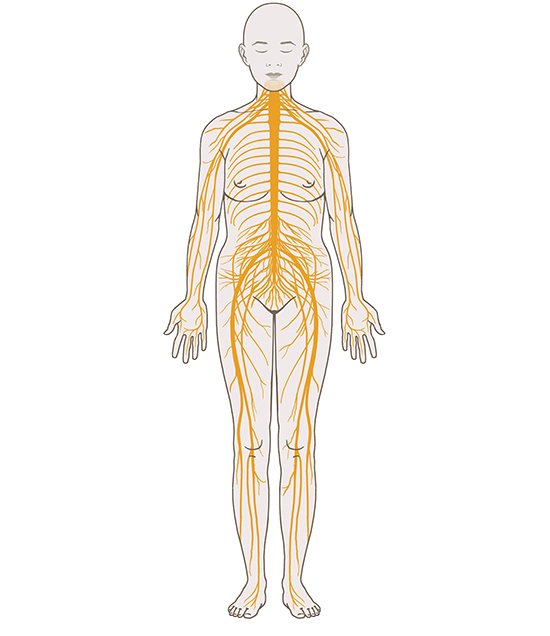
Your body has a total of 31 spinal nerves. A network of nerve branches spread out from the spinal nerves, all the way to our fingers and toes (peripheral nervous system). The signals that they pick up are sent to the brain along the spinal nerves and the spinal cord.

The diagram shows how a network of nerve branches spread out from the spinal nerves all the way to the tips of our fingers and toes.

This is how sensations such as touch, pain, heat or cold get from our skin to our brains. For example, if you bump your arm, the spinal nerve responsible for that area of skin (that dermatome) sends a signal to your brain along the spinal cord. The signal is then processed in your brain, and you feel pain.

Where are the dermatomes?

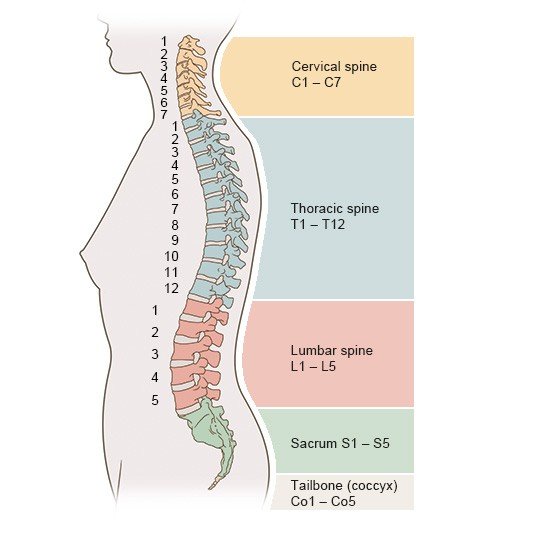
Spinal nerves and their dermatomes are named according to the sections of the spine where they branch off from the spinal cord:

  • C stands for the cervical spine (cervical = relating to the neck).
  • T stands for the thoracic spine (thoracic = belonging to the rib cage).
  • L stands for the (lumbar = belonging to the lower part of the back).
  • S stands for the sacrum (bone at the bottom of the spine, above the tailbone).

So, for example, the spinal nerve that exits at the 5th lumbar vertebra (spine bone) is called L5.

The diagram shows a side view of the five sections of an adult's spine.

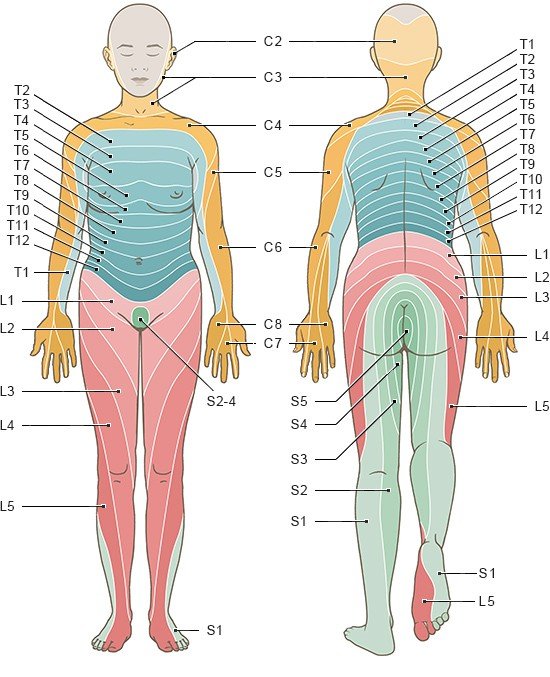
The corresponding dermatomes are given the same letters and numbers. The following illustration shows where the dermatomes are and which spinal nerve they are connected to:

The anatomical illustration shows where the dermatomes are on the body, what they are called, and which spinal nerves they are connected to.

For example, dermatome C6 includes the shoulder, the outside of the arm, and the thumb. The spinal nerve responsible for this dermatome exits the spine at the 6th cervical vertebra.

How do dermatomes help doctors diagnose diseases?

Certain symptoms can often be linked to one or more nerves. A typical example is a slipped disc that causes pain, muscle weakness and numbness in one leg. That’s because the bulging disc presses on the root of one of the spinal nerves that supply the leg.

The most commonly affected nerves are the nerve roots at the 4th or 5th lumbar vertebra and the top nerve root of the sacrum. Depending on where the affected nerve is, it will typically cause certain symptoms:

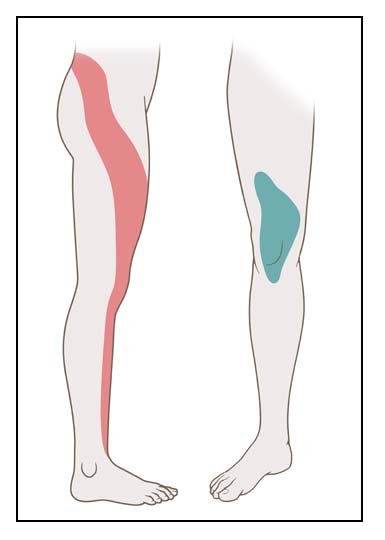
  • If the nerve root at the 4th lumbar vertebra (L4) is affected, the pain typically spreads from the buttocks across the front of the thigh to the knee, and sometimes to the inner side of the lower leg or to the arch of the foot too. Unusual sensations usually occur around the knee.
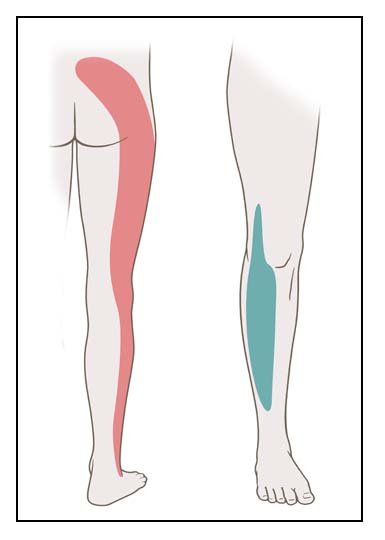
  • If the nerve root at the 5th lumbar vertebra (L5) is affected, the pain tends to spread from the outer back of the thigh to the shin or the top of the foot. Unusual sensations mainly occur on the outer side of the lower leg or on the top of the foot.
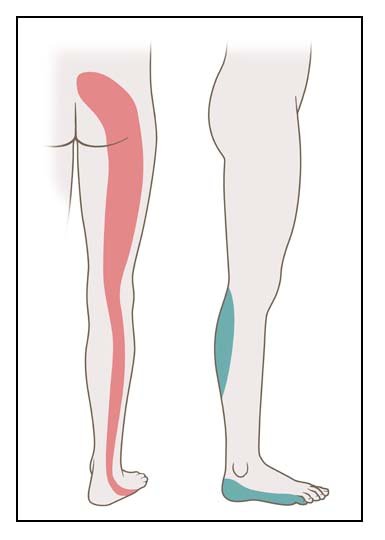
  • If the uppermost nerve root on the sacrum (S1) is affected, the pain usually radiates to the back of the leg. Here, unusual sensations are typically felt in the calf or on the outside of the foot. It might be more difficult to stand on your toes or lift your leg when standing.

Where symptoms can occur – depending on the affected nerve (red: pain, green: unusual sensations)

Pinched nerve root at the 4th lumbar vertebra:

Pinched nerve root at the 5th lumbar vertebra:

Pinched nerve root at the
sacrum:


So, the area of skin (dermatome) where the symptoms occur lets the doctor know which nerve root the slipped disc is likely pressing on. This information can be important when deciding whether to have surgery, for example. If a (MRI) scan shows that there's a slipped disc at the corresponding nerve, it’s more likely that surgery will help. But if the MRI image and the symptoms don’t match up, something else might be causing the symptoms.

What are myotomes?

Myotomes are groups of muscles that certain spinal nerves lead to. Like dermatomes, myotomes can also be used for : If a certain group of muscles is weak or paralyzed, doctors can tell which spinal nerve might be damaged. For example, if someone isn’t able to lift their arm, there might be a problem with the C5 spinal nerve, which supplies the large, triangular shoulder muscle.

Whitman PA, Launico MV, Adigun OO. Anatomy, Skin, Dermatomes. In: StatPearls. Treasure Island (FL): StatPearls Publishing; 2025.

IQWiG health information is written with the aim of helping people understand the advantages and disadvantages of the main treatment options and health care services.

Because IQWiG is a German institute, some of the information provided here is specific to the German health care system. The suitability of any of the described options in an individual case can be determined by talking to a doctor. informedhealth.org can provide support for talks with doctors and other medical professionals, but cannot replace them. We do not offer individual consultations.

Our information is based on the results of good-quality studies. It is written by a team of health care professionals, scientists and editors, and reviewed by external experts. You can find a detailed description of how our health information is produced and updated in our methods.

Comment on this page

What would you like to share with us?

We welcome any feedback and ideas - either via our form or by gi-kontakt@iqwig.de. We will review, but not publish, your ratings and comments. Your information will of course be treated confidentially. Fields marked with an asterisk (*) are required fields.

Please note that we do not provide individual advice on matters of health. You can read about where to find help and support in Germany in our information “How can I find self-help groups and information centers?

Über diese Seite

Created on December 11, 2025

Next planned update: 2028

Publisher:

Institute for Quality and Efficiency in Health Care (IQWiG, Germany)

Stay informed

Subscribe to our newsletter or newsfeed. You can find our growing collection of films on YouTube.