Obstructive sleep apnea

At a glance

  • People with obstructive sleep apnea stop breathing for short periods of time at night.
  • Other typical symptoms include loud snoring at night, as well as tiredness and difficulty concentrating during the day.
  • Obstructive sleep apnea increases the risk of various cardiovascular (heart and blood vessel) diseases.
  • The most effective treatment is CPAP therapy, where a machine gently blows air into your airways at night through a special mask.

Introduction

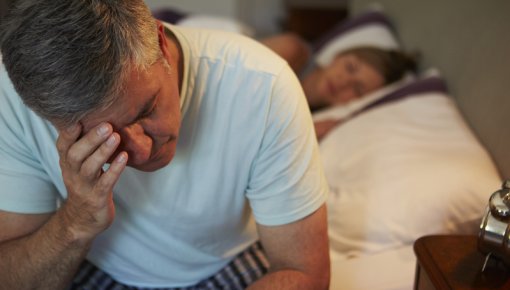
Photo of a man who is very tired

We all know what it’s like to feel tired after a sleepless night because of things like noise, worries or stress. But what if you actually get enough sleep and still feel absolutely beat the next morning? This is normal for many people with obstructive sleep (OSA): They stop breathing for short periods of time (usually without noticing) while sleeping, don’t get enough oxygen as a result, and feel very sleepy during the day. In the long term, this increases their risk of developing other illnesses and can have a huge effect on their quality of life.

Symptoms

People who have obstructive sleep usually snore very loudly. They regularly have phases of shallow breathing (hypopnea) and breathing pauses () that last longer than ten seconds while they are sleeping. Snoring itself is harmless; it is only classified as sleep if you have breathing pauses too.

The following symptoms may also be signs of sleep :

  • Exhaustion during the day
  • Trouble concentrating
  • Night sweats and frequent urination
  • Waking up suddenly, sometimes with a racing heart and shortness of breath
  • A dry mouth when you wake up
  • Headaches in the morning
  • Erection problems (impotence)

Causes and risk factors

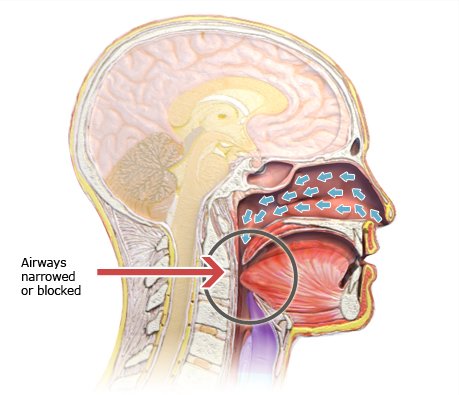
Sleep is caused by the muscles of the upper airways relaxing. Your throat then becomes narrow or even completely blocked, which leads to loud snoring noises when you breathe in and out.

As a result, your body doesn’t get enough oxygen. Your pulse and blood pressure fall too. The part of your brain responsible for breathing sets off an alarm and triggers a wake-up call, causing you to wake up briefly, usually without realizing it. This interrupts your natural sleep pattern, your heart starts beating faster and your blood pressure rises. These interruptions are also called “arousals.” If this keeps happening throughout the night, it may prevent you from entering deep sleep, which is what is needed to get restful sleep.

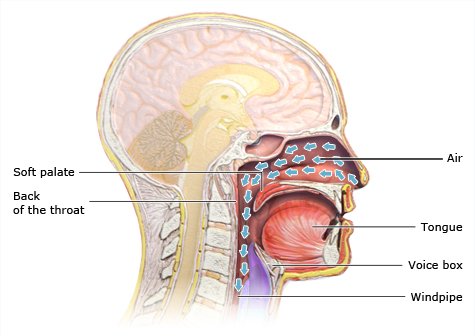
This simplified anatomical illustration shows the process of normal breathing in a cross-sectional view of the head.
This simplified anatomical diagram shows the narrowing of the airways in obstructive sleep apnea using a cross-section of the head.

People who have sleep are often very overweight or have unusual features in their mouth and throat area. These unusual features include enlarged tonsils, a small lower jaw, the position of the tongue and a small soft palate. The soft palate is the soft tissue at the back of the roof of your mouth. It is sometimes hard to breathe through your nose too. Sleeping on your back can make snoring and breathing difficulties more likely, but is rarely the only cause.

Drinking too much alcohol and taking sleeping pills or sedatives relaxes the throat muscles and can make sleep worse. The likelihood of developing obstructive sleep increases steadily after the age of 45.

Prevalence

According to estimates, about 10% of adults have obstructive sleep . It is more common in men than in women.

Effects

Severe sleep makes you feel constantly worn out and tired. Not getting enough restful sleep can affect your mood too. If you generally feel less well than people who usually get a good night's sleep, you may also be more likely to become depressed.

People who have sleep are at greater risk of developing high blood pressure (hypertension) and other cardiovascular diseases. So they are more likely to have a heart attack, a stroke or an abnormal heart rhythm (arrhythmia).

Breathing pauses don’t always cause problems or pose a health risk. If they only occur now and then, are short, and don’t cause tiredness during the day, there’s usually no reason to worry. But it may be a good idea to keep an eye on any breathing difficulties and see a doctor if they cause more long-term problems.

Diagnosis

If it’s thought you might have obstructive sleep , your doctor will first ask you about your symptoms and lifestyle habits. This is followed by a physical examination. You may be given a portable monitoring device which can be used when you are asleep to record things like your breathing, heart rate, blood oxygen levels, snoring, and body position. If there are any irregularities, you may be advised to have further tests in a sleep laboratory.

Sleep labs have rooms for patients. Here your sleep is monitored for one or more nights using different recording devices and a video camera. As well as recording your breathing, pulse, blood pressure and blood oxygen levels, they also record your brainwaves, and your eye and leg movements during sleep. Using the recorded data, the different sleep phases can be analyzed to see how long and how well you slept, and whether you spent enough time in deep sleep and dreaming. In people with sleep , the machines can record how often breathing pauses occur, how long they last, during which phases of sleep they occur, and the patient's sleeping position at the time. It is also possible to see how they affect the cardiovascular system and blood oxygen levels.

Treatment

If you’re very overweight, losing weight can help improve sleep . Many different treatment options are offered too. These include positional therapy and other special aids such as mouth guards, as well as machines that support breathing during the night and surgery. Some of these treatments have been scientifically proven to help people with sleep .

The most effective treatment for severe sleep is called therapy. stands for “continuous positive airway pressure.” In this treatment approach, air is taken from the immediate surroundings and blown into your airways at night using low pressure. While you sleep, you wear a breathing mask that is connected to a machine called a respirator. The gentle pressure keeps the upper airways open. People who use this machine have fewer breathing pauses, or even none at all. This can noticeably improve the symptoms such as tiredness during the day. Some people feel uncomfortable and confined when wearing the mask, though. Other common side effects include a dry throat and an irritated, sometimes blocked nose.

Medication is hardly ever used for the treatment of sleep nowadays. There are only approved medications for daytime sleepiness associated with sleep , which are intended to improve alertness during the day.

Everyday life

Obstructive sleep can greatly affect quality of life. Sleeping poorly can make you feel tired and “beat” during the day. Some people then fall asleep involuntarily for a very short time during the day – a phenomenon known as “microsleep.” This mostly happens when sitting or during quiet and more passive situations, for example at a concert, or while reading or watching television. It can become dangerous if this happens when you’re driving. Getting too little sleep can also cause problems with concentration or memory. Effective treatment can help limit these kinds of effects.

Sleep can affect your relationship if loud snoring disturbs your partner’s sleep as well, making you both feel tired and irritable during the day. The breathing pauses can be unsettling as well. But they are generally not dangerous.

therapy is the most effective way to relieve obstructive sleep , but it can be difficult to get used to. Many don’t like the idea of wearing a breathing mask every night. Patient education programs can help you get to grips with therapy. They often work, too.

Support groups for people with sleep are also a good resource.

I did find it hard to use the machine at first, but I can’t sleep without it now.

Read a real-life story about Christa's experiences, age 59

Further information

When people are ill or need medical advice, they usually go to see their family doctor or pediatrician first. Information about health care in Germany can help you to navigate the German healthcare system and find a suitable doctor. You can use this list of questions to prepare for your appointment.

IQWiG health information is written with the aim of helping people understand the advantages and disadvantages of the main treatment options and health care services.

Because IQWiG is a German institute, some of the information provided here is specific to the German health care system. The suitability of any of the described options in an individual case can be determined by talking to a doctor. informedhealth.org can provide support for talks with doctors and other medical professionals, but cannot replace them. We do not offer individual consultations.

Our information is based on the results of good-quality studies. It is written by a team of health care professionals, scientists and editors, and reviewed by external experts. You can find a detailed description of how our health information is produced and updated in our methods.

Comment on this page

What would you like to share with us?

We welcome any feedback and ideas - either via our form or by gi-kontakt@iqwig.de. We will review, but not publish, your ratings and comments. Your information will of course be treated confidentially. Fields marked with an asterisk (*) are required fields.

Please note that we do not provide individual advice on matters of health. You can read about where to find help and support in Germany in our information “How can I find self-help groups and information centers?

Über diese Seite

Updated on August 25, 2026

Next planned update: 2029

Publisher:

Institute for Quality and Efficiency in Health Care (IQWiG, Germany)

Stay informed

Subscribe to our newsletter or newsfeed. You can find our growing collection of films on YouTube.