What happens if you get pneumonia in the hospital?

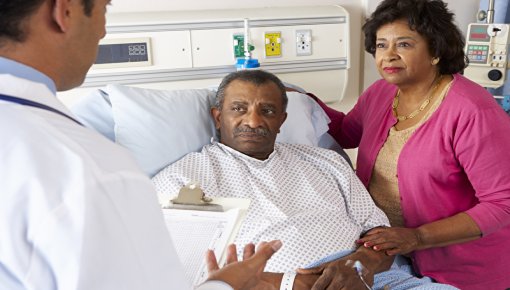
Photo of a hospital visit

People who are in hospital or a nursing home are often physically weakened. That increases their risk of complications from , such as trouble breathing, too little oxygen in their blood, heart failure or sepsis. What's more, can be caused by other germs in hospitals and nursing homes. Some of these are more difficult to treat.

Pneumonia that is caught in a hospital is known as hospital-acquired (HAP) or nosocomial .

Why is there a greater risk of complications in the hospital?

Pneumonia generally doesn't lead to complications in young, otherwise healthy people. People in hospitals and nursing homes are often older, bedridden or weakened as a result of a disease or surgery. Because of this, they are more likely to develop severe with complications – like lasting weakness or getting too little oxygen. That risk is particularly high in patients who become infected with while receiving artificial ventilation (breathing support).

Which bacteria play a role?

Hospital-acquired is sometimes caused by germs that only rarely cause otherwise. Bacteria typically found in hospitals and nursing homes include staphylococcus, various intestinal (bowel) like enterococcus, or certain non-typical like Pseudomonas aeruginosa.

These germs are not necessarily more aggressive than other . But the key difference is that they are resistant to the that help to fight off the usual that cause . Then the don't work.

Some are even resistant to several different types of . They are called multi-resistant or multidrug-resistant .

Which antibiotics are needed to treat hospital-acquired pneumonia?

Patients are usually first given an antibiotic drug that is known to be effective against possible hospital too. But these aren't always effective against multi-resistant . In that case, certain "reserve" (last-resort) are used. They are the only that are still effective against those germs. Usually, combinations of different are used.

Before starting treatment, blood samples or coughed-up mucus are sent to a laboratory. An antibiotic that is highly likely to be effective is then given immediately. At the same time, tests in the laboratory find out exactly which germs are causing the . Once that is known, the treatment with is adjusted if necessary.

What can prevent pneumonia?

There are special hygiene regulations in hospitals to protect people from hospital-acquired infections. Regularly disinfecting hands is key. Cleaning and disinfecting floors and surfaces and disposing of waste is also important, though.

Certain multi-resistant germs can enter the hospital from outside, too, and then spread there. Because of this, patients such as residents of retirement homes are tested for multi-resistant when they first come into a hospital – for example, to see if they have these in their nose or in chronic wounds. Then special rules apply during their hospital stay: They are given a single room, for instance. Visitors and hospital staff put on a protective gown and mask before entering the room, and they also disinfect their hands after every visit.

Pneumonia can also develop if contents of the mouth go down the wrong way, and bacteria from the mouth enter the lungs. For this reason, particularly patients in intensive care are given special assistance with oral hygiene. Some studies suggest that this can help to prevent hospital-acquired . But there were problems with many of these studies. For example, the researchers looked into very different measures – from antiseptic mouthwashes to professional teeth-cleaning.

Deutsche Gesellschaft für Pneumologie und Beatmungsmedizin (DGP). Update der S3-Leitlinie: Epidemiologie, Diagnostik und Therapie erwachsener Patienten mit nosokomialer Pneumonie. AWMF register no.: 020-013. 2024.

Kalil AC, Metersky ML, Klompas M et al. Management of Adults With Hospital-acquired and Ventilator-associated Pneumonia: 2016 Clinical Practice Guidelines by the Infectious Diseases Society of America and the American Thoracic Society. Clin Infect Dis 2016; 63(5): e61-e111.

Kaneoka A, Pisegna JM, Miloro KV et al. Prevention of Healthcare-Associated Pneumonia with Oral Care in Individuals Without Mechanical Ventilation: A Systematic Review and Meta-Analysis of Randomized Controlled Trials. Infect Control Hosp Epidemiol 2015; 36(8): 899-906.

Kasper DL, Fauci AS, Hauser SL et al. Harrison's Principles of Internal Medicine. New York: McGraw-Hill; 2015.

Lewis SR, Schofield-Robinson OJ, Rhodes S et al. Chlorhexidine bathing of the critically ill for the prevention of hospital-acquired infection. Cochrane Database Syst Rev 2019; (8): CD012248.

Liu C, Cao Y, Lin J et al. Oral care measures for preventing nursing home-acquired pneumonia. Cochrane Database Syst Rev 2018; (9): CD012416.

Lux LJ, Posey RE, Daniels LS et al. Pharmacokinetic/Pharmacodynamic Measures for Guiding Antibiotic Treatment for Hospital-Acquired Pneumonia. (AHRQ Comparative Effectiveness Reviews; No. 136). 2014.

National Institute for Health and Care Excellence (NICE). Pneumonia: Diagnosis and management of community- and hospital-acquired pneumonia in adults (NICE Clinical Guidelines; No. 191). 2023.

Pássaro L, Harbarth S, Landelle C. Prevention of hospital-acquired pneumonia in non-ventilated adult patients: a narrative review. Antimicrob Resist Infect Control 2016; 5: 43.

Robert Koch-Institut (RKI). Empfehlungen zur Prävention und Kontrolle von Methicillinresistenten Staphylococcus aureus-Stämmen (MRSA) in medizinischen und pflegerischen Einrichtungen. Bundesgesundheitsbl 2014; 57: 696–732.

Satheeshkumar PS, Papatheodorou S, Sonis S. Enhanced oral hygiene interventions as a risk mitigation strategy for the prevention of non-ventilator-associated pneumonia: a systematic review and meta-analysis. Br Dent J 2020; 228(8): 615-622.

Sjögren P, Wårdh I, Zimmerman M et al. Oral Care and Mortality in Older Adults with Pneumonia in Hospitals or Nursing Homes: Systematic Review and Meta-Analysis. J Am Geriatr Soc 2016; 64(10): 2109-2115.

Zhao T, Wu X, Zhang Q et al. Oral hygiene care for critically ill patients to prevent ventilator-associated pneumonia. Cochrane Database Syst Rev 2020; (12): CD008367.

IQWiG health information is written with the aim of helping people understand the advantages and disadvantages of the main treatment options and health care services.

Because IQWiG is a German institute, some of the information provided here is specific to the German health care system. The suitability of any of the described options in an individual case can be determined by talking to a doctor. informedhealth.org can provide support for talks with doctors and other medical professionals, but cannot replace them. We do not offer individual consultations.

Our information is based on the results of good-quality studies. It is written by a team of health care professionals, scientists and editors, and reviewed by external experts. You can find a detailed description of how our health information is produced and updated in our methods.

Comment on this page

What would you like to share with us?

We welcome any feedback and ideas - either via our form or by gi-kontakt@iqwig.de. We will review, but not publish, your ratings and comments. Your information will of course be treated confidentially. Fields marked with an asterisk (*) are required fields.

Please note that we do not provide individual advice on matters of health. You can read about where to find help and support in Germany in our information “How can I find self-help groups and information centers?

Über diese Seite

Updated on January 14, 2026

Next planned update: 2029

Publisher:

Institute for Quality and Efficiency in Health Care (IQWiG, Germany)

Stay informed

Subscribe to our newsletter or newsfeed. You can find our growing collection of films on YouTube.