Why are C-sections done?

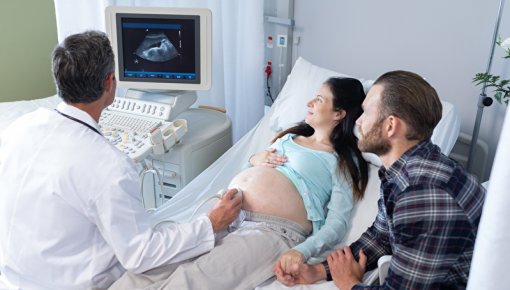
Photo of a pregnant woman having an ultrasound scan

About 1 out of every 3 babies born in Germany are delivered by C-section (Cesarean section). C-sections are sometimes needed for medical reasons, but in many situations they aren’t absolutely necessary. Then you can weigh the pros and cons together with your doctor and midwife.

Please note that some of the following information describes the situation in Germany specifically. You may find that things are different in other countries.

Sometimes the decision to have a C-section is made weeks before the birth. But it may also be made shortly before the birth, or even during a vaginal birth. There can be various reasons to have, or not to have, a C-section.

What is a C-section?

A C-section is a surgical procedure to deliver your baby. The surgeon makes a cut around 8 to 12 cm long across your lower belly. They usually use their fingers to pull apart the other layers of tissue inside the belly, like the muscles. Then they cut into the womb to take the baby out.

The procedure is usually carried out using regional anesthesia (an epidural or spinal block), and in rarer cases general anesthesia may be used. If you’re given a regional anesthetic, you’ll be awake but feel no pain (or hardly any pain) in the lower half of your body.

Good to know:

The article “What does a C-section involve?” explains exactly what you can expect when you have a C-section.

When is a C-section absolutely necessary?

Sometimes certain types of complications occur during pregnancy or childbirth, making a vaginal birth too risky or even impossible. Then the baby can be delivered safely by C-section.

Situations that might make a C-section necessary include:

  • The baby is in a position that makes vaginal birth risky or impossible (lying sideways, for example).
  • The placenta is in front of the cervix, blocking the birth canal.
  • The umbilical cord is between the child and the birth canal (umbilical cord prolapse).
  • The wall of the womb is at risk of tearing.
  • The placenta separates from the wall of the womb too soon.
  • Your baby’s heartbeat recordings (CTG) indicate that they're in trouble.
  • The childbirth team think the baby isn’t getting enough oxygen.

In Germany, fewer than 10 out of 100 C-sections are performed for urgent reasons like these.

What about other medical reasons for a C-section?

In some situations, a vaginal birth has slightly more risks. Then you can talk to your doctor and midwife about the best type of birth for you and your baby. Because C-sections have certain risks, too.

In the following situations, a C-section isn't always necessary but it may be considered:

  • A previous C-section delivery: Women who have had a C-section in the past can usually give birth safely through their vagina. But the C-section scar means that the wall of the womb is more likely to tear during a vaginal birth. The placenta is also more likely to be in a difficult position. Doctors can do examinations to check for this. If there are no medical reasons to do one or the other, you can decide whether you would prefer a vaginal birth or another C-section.
  • Breech position: Most babies are born head-first, with their head facing downwards. In a breech pregnancy, the baby's bottom or feet are facing downwards. Then a vaginal birth is often still possible, but you can decide to have a C-section instead. The doctor can also try to turn the baby around into a head-first position (from the outside) a few weeks before the birth. The medical term for this is external cephalic version, or ECV for short.
  • Delayed growth of the baby: Sometimes, an ultrasound scan shows that the baby is smaller than expected because the placenta isn't supplying enough nutrients and oxygen. Then a vaginal birth could be too stressful for the baby. When deciding whether a C-section might be better, various factors play a role. These include how concerning the ultrasound findings are and how far along the pregnancy is.
  • Pregnancy with more than one baby: If you're carrying two or more babies, your doctor may consider doing a C-section. That will depend on things like the position of the baby that is likely to be born first and whether there are complications in pregnancy – for example, where the baby doesn't get what they need from the placenta. Then a C-section can be done to prevent deficiencies. A C-section is nearly always recommended for pregnancies with more than two babies.
  • Preterm birth: If your contractions start or your water breaks weeks before your due date, your baby has a higher risk of problems because it’s not ready to be born. Whether a C-section is then safer than a vaginal birth depends on a number of factors that the childbirth team will discuss with you and your partner.
  • Transmissible diseases: Mothers can pass on certain diseases to their baby during birth. If you have HIV, you can still have a vaginal birth if the you take antiviral medication and the number of viruses in your body is very low. Otherwise, a C-section is recommended. C-sections are also generally recommended if you have genital herpes in the last three months of pregnancy. But they're not recommended if you have hepatitis B or C. That's because there's no proof that a C-section reduces the risk of passing these diseases on to the baby. C-sections aren’t recommended if you have an HPV infection, either.
  • Stalled labor: Sometimes, the cervix opens more slowly than expected. Then the baby might not move further down the birth canal, or may only move down very slowly. You can wait a while and try to help things along by moving around and changing positions. If you’re exhausted, more complications are likely, or the birth hasn’t progressed for some time, the childbirth team will often recommend a C-section.

About 90 out of 100 C-sections are performed for non-essential reasons like these.

Does your choice of hospital influence the type of birth you have?

The hospital you choose can also affect the likelihood of having a C-section. Some hospitals recommend C-sections more readily than others. That can be due to things like the staffing situation or the childbirth team's experience.

It is easier to plan C-sections and they're usually quicker than vaginal births. That might have an influence on the advice given in some hospitals. For example, C-sections were found to be more common in smaller hospital departments. C-sections are also more common in some parts of Germany than they are in others, for no medical reasons. The number of C-sections a hospital performs depends on a lot of things, such as whether the hospital is specialized in higher-risk pregnancies.

You can ask about the hospital's C-section rate at an information event for pregnant women or when registering with the hospital. You can also look up C-section rates in German hospitals on the website of the Mother Hood e.V. association.

What if you're nervous about a vaginal birth?

Some women are nervous about giving birth vaginally – perhaps because they're worried about labor pain or because they've had bad experiences in the past. Others worry about longer-term problems like damage to their pelvic floor, perineal tears or negative effects on their sex life. These worries might also be partly due to other difficult experiences or an anxiety disorder.

It is helpful to be open with your doctor and midwife about any worries you have. They can help you consider the pros and cons of a C-section or a vaginal birth in your particular situation. They can also tell you about different places where you can give birth (like in a hospital, birth center, or at home) and about the pain-relief options.

If you’d like to talk through past birth experiences, you can contact the hospital where you gave birth and ask to speak to a doctor and a midwife.

Other points you can discuss with your childbirth team are: How do you want your next birth to be? What support do you need in order to feel safe? How can you deal with challenges during labor? The answers to these questions can also help when choosing where to give birth and who to have with you as your support person.

Psychologists and pregnancy counseling centers (in German: Schwangerschaftsberatungsstelle) can help too. These centers offer consultations free of charge.

When is the decision made to deliver the baby by C-section?

Sometimes, it already becomes clear during prenatal care appointments that you will need a C-section, or at least that it might be considered. The procedure is then usually scheduled for the 40th week of pregnancy, one week before the estimated due date. This is known as a planned C-section (primärer Kaiserschnitt in German). It is also called a scheduled or elective C-section.

If the C-section is done after the vaginal birth process has already started, it is an unplanned C-section (sekundärer Kaiserschnitt).

Sometimes, problems occur during a vaginal birth – for example, if the birth stops progressing or the baby’s heartbeat gets worse. Then a C-section can be done to quickly deliver the baby. There is normally enough time to make that decision together with the doctors and midwives during labor.

In rare cases, an emergency situation arises during labor, where the mother or baby is in immediate danger and needs help fast. Then the baby is usually delivered by C-section within 20 minutes (emergency C-section). 4 out of 100 C-sections are emergency C-sections.

What are the advantages of C-sections for the mother?

C-sections offer a clear advantage in emergency situations and when a vaginal birth would be too risky. Then they are done to protect the health or life of the baby or mother.

The following issues are less common with a C-section than with a vaginal birth:

  • Pain in the vagina and perineum (the area between the vagina and the anus) during and after the birth
  • A tear in the perineum (perineal tear)
  • Incontinence – accidental bladder or bowel leaks in the year following the birth
  • Pelvic organ prolapse, where the vagina or womb slips down

The likelihood of these things happening during a vaginal birth will depend on your individual situation. Factors that play a role here include your age, the size of the baby, whether you've given birth before and, if so, how many times. Another factor is what happens during the birth. For instance, you're more likely to have fecal (accidental bowel leaks) if your baby was delivered using instruments like forceps. These potential consequences of a vaginal birth may be mild or more severe. Some women are affected by them for longer.

What are the immediate disadvantages of C-sections for the mother?

Like with any operation, complications can occur during a C-section, too. These include the following:

  • Pain, surgical wound infections or wound-healing problems
  • Losing a lot of blood
  • Damage to nearby organs (bladder, ureter, bowel)
  • The usual anesthesia-related risks, like circulatory problems – although there are usually no complications here. The possible side effects of the anesthetic include nausea and a headache.

In around 2 out of 1,000 C-sections, the womb has to be removed due to injury.

The C-section itself is actually less painful than a vaginal birth. But the surgical wound means that the pain is worse afterwards. Women stay in the hospital for about 1 to 2 days longer, and often need more rest and help taking care of the child in the first few days and weeks after the birth.

Do C-sections affect future pregnancies and births?

Most women who have a C-section are able to get pregnant again. But research has shown that further pregnancies are a little less likely after a C-section. Researchers are looking into whether that's because of fertility problems or something else.

One possible reason could be a result of poor wound-healing, known as an isthmocele (also: Cesarean scar defect). This is when a pouch or indentation develops in the scar area in the wall of the womb. Signs of an isthmocele include spotting (slight bleeding from the vagina) and more painful periods.

Women who become pregnant again after a C-section have a higher risk of the following complications:

  • Placenta growing into the wall of the womb (placenta accreta) or through it. That happens in about 1 out of 1,000 pregnancies after a C-section. It can lead to heavy bleeding when the doctor removes the placenta.
  • In about 3 out of 1,000 women, the wall of the womb tears open (uterine rupture), usually during contractions. This can happen because the C-section scar makes the womb less stable. It is a medical emergency. Then the baby is usually delivered by emergency C-section within 20 minutes.

Giving birth after previous C-section: Vaginal birth or another C-section?

If you’ve had a C-section in the past and are pregnant again, you might wonder whether to have another C-section or try to deliver the baby through your vagina. This decision aid can help you consider the options and give you useful information for talks with your childbirth team.

How C-sections affect women's health: Facts and figures

Giving birth can have three different kinds of health-related effects:

  • Direct effects (during or immediately after birth)
  • Effects on further pregnancies
  • Effects on the pelvic floor

The following tables show the differences between C-section births and vaginal births.

Table: Direct health effects of C-sections: How common compared to vaginal births?
  C-section Vaginal birth
More common in C-section births:
Womb removed due to injury In 2 out of 1,000 births In 1 out of 1,000 births
Pain or surgical wound-healing problems in the lower belly area Possible Not applicable
Less common in C-section births:
Pain during birth Hardly noticeable Often severe
Serious perineal tear (3rd or 4th degree) Not applicable In 15 out of 1,000 births without a ventouse suction cup or forceps
Table: Effects of C-section on further pregnancies: How common compared to vaginal births?
  C-section Vaginal birth
More common in C-section births:
Further pregnancies: Placenta grows into the wall of the womb In 1 out of 1,000 subsequent pregnancies
In fewer than 1 out of 1,000 subsequent pregnancies
Further pregnancies: Wall of the womb tears open In 3 out of 1,000 subsequent pregnancies
In fewer than 1 out of 1,000 subsequent pregnancies
Table: Longer-term health effects of C-section: How common compared to vaginal births?
  C-section Vaginal birth
Less common in C-section births:
Accidental bladder leaks In 200 out of 1,000 births In 490 out of 1,000 births
Accidental bowel leaks In 80 out of 1,000 births In 150 out of 1,000 births using special instruments

What are the pros and cons of a C-section for the baby?

The two types of birth are similar in terms of safety. Serious complications are rare. Occasionally, babies delivered by C-section can suffer injuries but this is also rare. The injuries are usually small cuts that heal quickly. Babies are sometimes injured during vaginal births as well, but it's generally a small injury like bruising.

The following things are equally unlikely after C-section births and vaginal births: the baby being moved to an intensive care unit straight after the birth, dying during the birth, or dying in the first year of life.

Research suggests that problems like asthma or being overweight are more common after a C-section – but only slightly more common. The reasons for this are not clear. According to experts, one reason might be that children born by C-section have a weaker because they didn't come into contact with the germs in the birth canal.

It is not clear whether a C-section increases the chances of the child having a developmental disorder or mental health problems. Some research has shown a slightly higher likelihood of certain diagnoses, like ADHD or autism. But it’s not clear whether this was due to the C-section or other reasons. So there's no proven link here.

Where can you get advice?

Parents-to-be can discuss the pros and cons of having a C-section with their doctors. Midwives can also offer advice.

If the birth is associated with particular risks – like breech births are, for example – you can seek advice from a hospital that is specialized in that kind of birth.

In Germany, pregnancy counseling centers (Schwangerschaftsberatungsstelle) focus on the personal and emotional aspects of the decision. The counseling there is free of charge and you can ask to remain anonymous. You can find out more about where to get advice in Germany on the website of the Federal Institute of Public Health (BIÖG).

Adewale V, Varotsis D, Iyer N et al. Planned cesarean delivery vs planned vaginal delivery: a systematic review and meta-analysis of randomized controlled trials. Am J Obstet Gynecol MFM 2023; 5(12): 101186.

Cattani L, Decoene J, Page AS et al. Pregnancy, labour and delivery as risk factors for pelvic organ prolapse: a systematic review. Int Urogynecol J 2021; 32(7): 1623-1631.

Chen X, Mi MY. The impact of a trial of labor after cesarean versus elective repeat cesarean delivery: A meta-analysis. Medicine (Baltimore) 2024; 103(7): e37156.

Evans K, Fraser H, Uthman O et al. The effect of mode of delivery on health-related quality-of-life in mothers: a systematic review and meta-analysis. BMC Pregnancy Childbirth 2022; 22(1): 149.

Institut für Qualitätssicherung und Transparenz im Gesundheitswesen (IQTIG). PM-GEBH: Geburtshilfe (Bundesauswertung). Auswertungsjahr 2025, Erfassungsjahr 2024. 2025.

Keag OE, Norman JE, Stock SJ. Long-term risks and benefits associated with cesarean delivery for mother, baby, and subsequent pregnancies: Systematic review and meta-analysis. PLoS Med 2018; 15(1): e1002494.

Klein Meuleman SJ, Murji A, van den Bosch T et al. Definition and Criteria for Diagnosing Cesarean Scar Disorder. JAMA Netw Open 2023; 6(3): e235321.

National Institute for Health and Care Excellence (NICE). Appendix A: Benefits and risks of vaginal and caesarean birth (NG192, FINAL). 2024.

National Institute for Health and Care Excellence (NICE). Caesarean birth (NICE Guidelines; No. NG192). 2025.

Prediger B, Mathes T, Polus S et al. A systematic review and time-response meta-analysis of the optimal timing of elective caesarean sections for best maternal and neonatal health outcomes. BMC Pregnancy Childbirth 2020; 20(1): 395.

Pschyrembel online. Uterusruptur. 2025.

Slabuszewska-Jozwiak A, Szymanski JK, Ciebiera M et al. Pediatrics Consequences of Caesarean Section-A Systematic Review and Meta-Analysis. Int J Environ Res Public Health 2020; 17(21).

Statistisches Bundesamt (Destatis). Fast ein Drittel aller Geburten im Jahr 2023 durch Kaiserschnitt (Pressemitteilung Nr. N024). 2025.

Wei J, Zheng Z, Zheng Y et al. The relationship between mode of delivery and Attention Deficit Hyperactivity Disorder: a meta-analysis and systematic review. PeerJ 2026; 14: e20603.

Zhang T, Sidorchuk A, Sevilla-Cermeño L et al. Association of Cesarean Delivery With Risk of Neurodevelopmental and Psychiatric Disorders in the Offspring: A Systematic Review and Meta-analysis. JAMA Netw Open 2019; 2(8): e1910236.

IQWiG health information is written with the aim of helping people understand the advantages and disadvantages of the main treatment options and health care services.

Because IQWiG is a German institute, some of the information provided here is specific to the German health care system. The suitability of any of the described options in an individual case can be determined by talking to a doctor. informedhealth.org can provide support for talks with doctors and other medical professionals, but cannot replace them. We do not offer individual consultations.

Our information is based on the results of good-quality studies. It is written by a team of health care professionals, scientists and editors, and reviewed by external experts. You can find a detailed description of how our health information is produced and updated in our methods.

Comment on this page

What would you like to share with us?

We welcome any feedback and ideas - either via our form or by gi-kontakt@iqwig.de. We will review, but not publish, your ratings and comments. Your information will of course be treated confidentially. Fields marked with an asterisk (*) are required fields.

Please note that we do not provide individual advice on matters of health. You can read about where to find help and support in Germany in our information “How can I find self-help groups and information centers?”

Über diese Seite

Updated on November 24, 2026

Next planned update: 2029

Publisher:

Institute for Quality and Efficiency in Health Care (IQWiG, Germany)

Stay informed

Subscribe to our newsletter or newsfeed. You can find our growing collection of films on YouTube.