How are genes passed on?
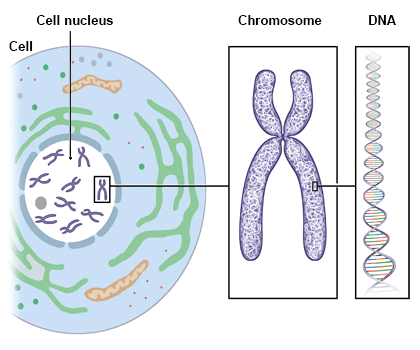
The first cell of a new human being forms during fertilization when an egg cell combines with a sperm cell. This cell has the genetic information that includes the encoded building instructions for the whole body. From now on, every time a cell divides, a complete copy of this genetic information is passed on to the two new (“daughter”) cells.
As the growing baby develops in the womb, cells continue dividing, leading to the formation of various types of cells, tissues and organs. Even though the cells in different types of tissue (e.g. muscle cells and liver cells) carry out very different tasks, they still contain the same genetic information that was passed on from the very first cell.
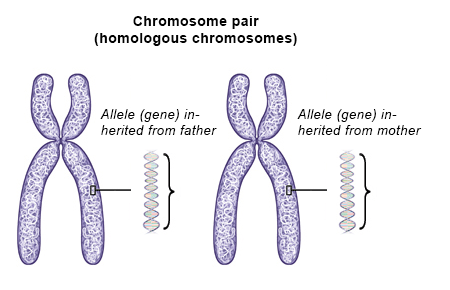
But when people talk about genes being passed on, they generally don't mean genes being passed on from cell to cell during cell division. Instead, they usually mean genes being passed on from parents to children. This is known as "heredity" or "inherited genes."