Low back pain

At a glance

  • Although back pain is unpleasant, it's almost always harmless.
  • It usually goes away on its own after a few days or weeks.
  • It is important to stay active – movement is the best way to manage the pain.
  • Certain exercises strengthen the back, reduce the pain and prevent back problems from returning.
  • Painkillers such as ibuprofen can also relieve the pain for a short time.
  • Imaging techniques like MRIs usually aren’t needed, and often aren’t helpful either.

Introduction

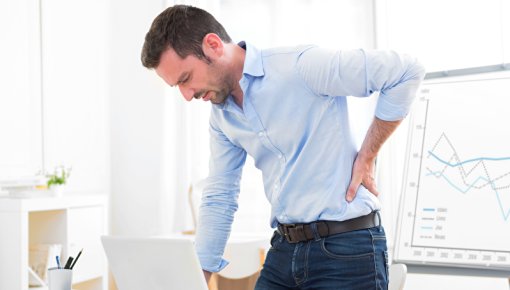
Photo of a man with back pain at a desk

Most people experience low back pain at some point in their lives. Back pain is usually "non-specific." This means that no specific cause can be found. Pain in your back can be caused by many things. This is because a lot of structures in the back are close together and work closely together – including muscles, fascia, ligaments and joints in the spine. As well as too little exercise or too much physical strain, mental stress can also play a role in back problems – for example, by causing tension.

Because back pain is often caused by a combination of factors, even imaging techniques like (MRI) scans usually aren't enough to reliably diagnose the problem. For this reason, experts do not recommend the routine use of imaging techniques when looking for the cause of back pain.

Not finding a clear cause can be frustrating for people who have chronic or recurring back pain. The good news is that you can still do something about the pain. The main things are staying active in daily life and doing specific exercises. It also often helps to know that non-specific back pain doesn't mean that the back is injured. So there’s no reason to avoid physical activity.

Important:

Low back pain is very rarely caused by anything serious. Possible signs of a serious cause include problems urinating (peeing) or passing stools (pooping), numbness in the genital area, paralysis of the leg muscles, fever, chills or unexplained weight loss. If you have any of these symptoms, you should go to your doctor or a hospital soon.

Symptoms

Non-specific low back pain is the most common type of back pain. It is diagnosed when

  • the pain occurs in the lower back (between your lowest rib and your buttocks), and
  • there are no signs of other problems – such as severe pain radiating into your leg or paralysis in the leg muscles for the first time.

The pain is usually associated with tense muscles, and often limits your range of movement. Sometimes it's accompanied by pain in the thigh, too. But the thigh pain usually isn't as bad as the back pain.

In some cases, severe acute low back pain suddenly strikes out of the blue. This is caused by a temporary problem in the lower back. Although it can be very painful and restrict your movement for a while, it's not dangerous and usually improves a lot within a few days.

Causes and risk factors

In more than 85% of people who have back pain, no clear cause can be found. The following factors may play a role in the development of this non-specific back pain:

  • Lack of movement
  • Abnormal strain from sitting still for too long
  • One-sided or unusual strenuous physical activity
  • Weak core muscles
  • Tense muscles (sometimes due to abnormal strain)
  • Psychological stress such as stress at the workplace, financial or family-related worries, severe anxiety or self-doubt, illnesses such as depression
  • Changes in the perception of pain in the central nervous system that can cause chronic pain
  • Genetic predisposition (your genes)

Sometimes, though, back pain is clearly caused by a specific thing, such as a slipped disc. This kind of pain is often associated with particular symptoms, such as pain radiating into a leg or numb areas. If doctors think there's a specific cause like this, they may suggest using an imaging technique like a (MRI) scan – especially if the symptoms don't go away within several weeks.

The following table lists possible specific causes of back pain and the typical symptoms in each case.

Table: Specific causes of back pain
  What is this? Typical symptoms
Acute slipped disc
  • Soft tissue between two bones in the spine (a spinal disc) bulges outwards, pushing against and irritating nerves in the spine area
  • Typically occurs in middle-aged people
  • Pain that goes down the leg, along the sciatic nerve (sciatica)
  • Sometimes numb areas, tingling and weak muscles along the sciatic nerve

Facet joint syndrome (spinal osteoarthritis)
  • Irritated nerve endings due to age-related changes in the joints of the spine
  • Very difficult to diagnose (MRI not reliable)
  • Similar to non-specific back pain symptoms
Ankylosing spondylitis
  • Rheumatic disease that leads to chronic of the spine, among other things
  • Typically begins before the age of 40
  • Morning stiffness that lasts longer than one hour
  • Sometimes general exhaustion too
  • The bones in the spine may fuse (join together) over time
Scoliosis
  • Twisted/tilted spine
  • Occurs in children, teenagers and adults
  • Episodes of pain along the spine, sometimes also in the shoulders and arms
Spinal stenosis
  • Narrowing of the spinal canal
  • Mainly occurs after the age of 60
  • Sometimes occurs together with spondylolisthesis (a "slipped back bone")
  • Buttock and thigh pain, especially when walking or standing for a long time
  • Leg weakness, can only walk short distances
  • Improvement when sitting or leaning forward
Spinal bone fractures
  • Usually a result of osteoporosis
  • More common in post-menopausal women
  • In younger people it's usually a result of an accident
  • Pain and tenderness around the fractured spinal bone

In rarer cases, back pain is caused by a problem that has nothing to do with the spine or the muscles and ligaments in the back – like kidney stones, pancreatitis, a gallbladder inflammation, endometriosis or shingles.

Outlook

Non-specific low back pain usually goes away (or at least gets a lot better) within a few days or weeks, even without treatment. In many people, though, the pain keeps coming back: Research has found that this happens within a year in up to half of all cases.

In some people, the pain is more stubborn and only improves slowly over many months. Or it becomes chronic. In other words, it doesn't go away for a long period of time or keeps coming back a lot.

Chronic low back pain can be very different in different people. For instance,

  • phases of more severe pain may alternate with phases of milder pain,
  • the pain might be constant but always mild, or
  • it might be severe and last for quite a long time.

It is not possible to predict exactly how low back pain will develop over time in a specific person.

Diagnosis

To rule out an urgent medical problem or other illness, your family doctor or orthopedist will first ask a few questions. For example:

  • Where exactly does it hurt?
  • Is this the first time you've had low back pain or have you had it before?
  • Do you have any other symptoms such as numbness or signs of paralysis?
  • Does it only hurt when you move, or when you're resting and in a lying position too?
  • Did you have an accident before the pain started?
  • Do you regularly take certain medications such as steroids?
  • Do you have any other illnesses?

The doctor will also ask about any physical or mental strain that could play a role, and whether you're able to balance it out – for example, through physical exercise or relaxation.

As part of the physical examination, the doctor will do things like feel the muscles in your back to see if there are any painful or tense areas, test your reflexes and check how well you can move.

Your answers to the questions and the physical examination are usually enough to rule out any major health problems. Then no further testing is needed. If there are any signs of specific problems like a bone fracture or a slipped disc, further examinations may be recommended – such as an x-ray scan, a computer tomography (CT) scan or a (MRI) scan. Further testing may also be done if the symptoms are still there (or have got worse) after a few weeks.

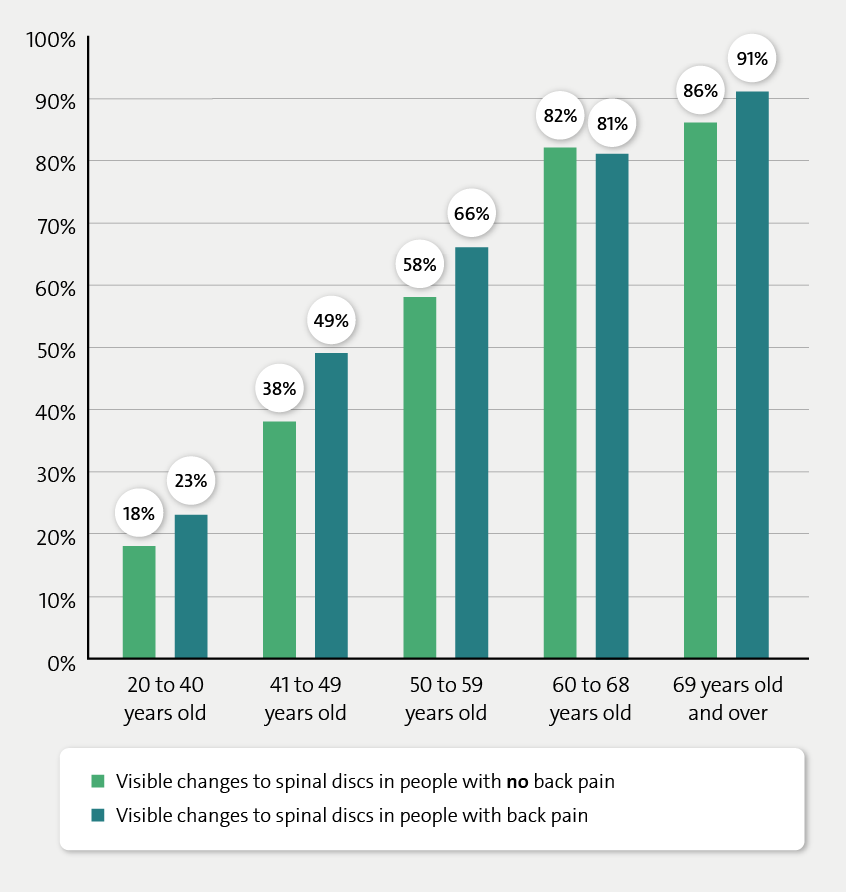
Medical associations do not recommend the routine use of back scans, though. This is because imaging techniques such as MRI scans find irregularities in bones or spinal discs in many people who don't have back pain. These irregularities are usually caused by normal, age-related changes in the body. In research where adults had MRI scans, it was found that about 20% of all 20 to 40-year-olds (and more than 80% of all people over the age of 70) have a protruding spinal disc.

The bar chart shows changes to the spinal discs of people in different age groups (with and without back pain) as a percentage.

If imaging techniques find an apparent cause of back pain that actually has nothing to do with the symptoms, that can result in unnecessary treatment or the wrong kind of treatment. Seeing "abnormal" things in your MRI scan can also be worrying, although they're just harmless, age-related changes. Then you might feel like you have to be careful and avoid movement or avoid putting strain on your back. That can make back pain worse, though.

Prevention

In many people, back pain comes and goes in phases. The most effective way to prevent low back pain from returning is by regularly doing exercise. Several studies have shown that this can almost halve the back pain phases:

  • Without exercise, about 50 out of 100 people had low back pain again within one year.
  • With exercise, about 30 out of 100 people had low back pain again within one year.

Going on regular walks reduces back pain phases almost as well as more strenuous exercise does. This was shown in a large study where the participants walked for half an hour five times a week if possible.

It is important to stay physically active in the long term – and to be aware that doing exercise doesn't always guarantee that you won't have back pain, but it can reduce the frequency and intensity of the pain. So if the pain returns despite doing regular exercise, don't let that discourage you.

Treatment

The best way to manage back pain depends on various factors, like whether you've had the pain for a short time (acute pain) or a long time (chronic pain). If no clear cause of back pain can be found, surgery is generally not recommended.

Acute back pain

If you have severe acute back pain, you should temporarily avoid lifting heavy objects and take care when bending down. But it's important to stay as active as possible. This includes trying to go about your normal daily life, not spending too much time sitting in one position at work, and not lying down for too long. Light forms of exercise such as walking, swimming or loosening exercises can also help.

Acute back pain nearly always goes away on its own. Some people find it soothing to apply heat – for instance, in the form of a hot water bottle or a special heated cushion. Anti-inflammatory painkillers such as ibuprofen can sometimes help, too. But they should only be used over a short time period (up to two weeks).

Chronic back pain

Over 200 studies have shown that movement is also the best treatment for chronic low back pain. The many types of exercise that have been proven to help include:

  • Exercises to stabilize the muscles in the abdomen, back and pelvis
  • Exercises to improve posture and strength in the whole body
  • Pilates and yoga

It is best to choose a form of exercise that suits your own situation and preferences, and that you can keep up over the long term. In Germany, the costs of movement and exercise programs are often partially covered by your public health insurer or statutory pension fund (Rentenversicherung). This includes the costs of medically prescribed apps (digital health applications, or DiGAs for short), physical therapy, health promotion classes and rehabilitation exercise classes (Rehasport) in a group.

Medication is only recommended as an additional help and should not be taken over the long term because of the risks involved. Mindfulness-based approaches and relaxation exercises such as Jacobson's muscle relaxation are helpful for some people. You can actively relax in this way after doing physical exercise, too.

There are also a wide range of passive treatments on offer. These include , massages, mobilization or manipulation of the spine, osteopathy, shoe inserts, ultrasound and laser treatments, as well as transcutaneous electrical nerve stimulation (TENS). Most passive treatments aren't very effective, only help for a short time or haven't been studied enough. Because of this, experts recommend that they only be used in addition to other treatments, if at all.

Chronic back pain can also be treated with cognitive behavioral therapy. This is a type of psychotherapy is used in the treatment of chronic pain.

Rehabilitation

Frequently recurring or persistent low back pain can affect your daily life and result in long periods of time off work. You may then be able to take part in an outpatient or inpatient rehabilitation program. The aim of rehabilitation programs is to manage your symptoms well enough to be able to go about your normal daily life again. So it's not only meant for people who are at risk of having to work less, but also for those who have been off work for a longer period of time. People in Germany apply for a place in a rehabilitation program through their family doctor's practice.

The program often consists of something known as multimodal pain management. This includes things like physical therapy, exercise, behavioral therapy, patient education and relaxation techniques. The program should be tailored to your personal situation. Rehabilitation programs typically last three weeks.

Multimodal pain management treatments are usually carried out in an outpatient setting. But they sometimes take place in a specialized day clinic or during a hospital stay. Then you need a hospital referral from your doctor.

Everyday life

Chronic low back pain can take its toll physically and emotionally. But a lot of people develop strategies to better cope with the pain and the symptoms over time.

Even if you have chronic pain, it's important to stay physically active and not be restricted too much in daily life. If you do less because of your pain, you risk creating a vicious circle in which pain, harmful thoughts, anxiety, overly cautious behavior and becoming withdrawn constantly reinforce each other. To avoid this, don't let the pain stop you from doing things that you enjoy. After all, those things can distract you from the pain too.

Further information

When people are ill or need medical advice, they usually go to see their family doctor first. Information about health care in Germany can help you to navigate the German health care system and find a suitable doctor. You can use this list of questions to prepare for your appointment.

Anheyer D, Haller H, Barth J et al. Mindfulness-Based Stress Reduction for Treating Low Back Pain: A Systematic Review and Meta-analysis. Ann Intern Med 2017; 166(11): 799-807.

Chenot JF, Greitemann B, Kladny B et al. Nichtspezifischer Kreuzschmerz. Dtsch Arztebl Int 2017; 114(51-52): 883-890.

Chou R, Deyo R, Friedly J et al. Nonpharmacologic Therapies for Low Back Pain: A Systematic Review for an American College of Physicians Clinical Practice Guideline. Ann Intern Med 2017; 166(7): 493-505.

Hartvigsen J, Hancock MJ, Kongsted A et al. What low back pain is and why we need to pay attention. Lancet 2018; 391(10137): 2356-2367.

Hayden JA, Ellis J, Ogilvie R et al. Exercise therapy for chronic low back pain. Cochrane Database Syst Rev 2021; (9): CD009790.

Kasch R, Truthmann J, Hancock MJ et al. Association of Lumbar MRI Findings with Current and Future Back Pain in a Population-based Cohort Study. Spine (Phila Pa 1976) 2022; 47(3): 201-211.

National Institute for Health and Care Excellence (NICE). Low Back Pain and Sciatica in Over 16s: Assessment and Management. 2016.

Pocovi NC, de Campos TF, Christine Lin CW et al. Walking, Cycling, and Swimming for Nonspecific Low Back Pain: A Systematic Review With Meta-analysis. J Orthop Sports Phys Ther 2022; 52(2): 85-99.

Pocovi NC, Lin CC, French SD et al. Effectiveness and cost-effectiveness of an individualised, progressive walking and education intervention for the prevention of low back pain recurrence in Australia (WalkBack): a randomised controlled trial. Lancet 2024; 404(10448): 134-144.

Skelly AC, Chou R, Dettori JR et al. Noninvasive Nonpharmacological Treatment for Chronic Pain: A Systematic Review Update. (AHRQ Comparative Effectiveness Reviews; No. 227). 2020.

Steffens D, Maher CG, Pereira LS et al. Prevention of Low Back Pain: A Systematic Review and Meta-analysis. JAMA Intern Med 2016; 176(2): 199-208.

Van der Gaag WH, Roelofs PD, Enthoven WT et al. Non-steroidal anti-inflammatory drugs for acute low back pain. Cochrane Database Syst Rev 2020; (4): CD013581.

Wallwork SB, Braithwaite FA, O'Keeffe M et al. The clinical course of acute, subacute and persistent low back pain: a systematic review and meta-analysis. CMAJ 2024; 196(2): E29-E46.

IQWiG health information is written with the aim of helping people understand the advantages and disadvantages of the main treatment options and health care services.

Because IQWiG is a German institute, some of the information provided here is specific to the German health care system. The suitability of any of the described options in an individual case can be determined by talking to a doctor. informedhealth.org can provide support for talks with doctors and other medical professionals, but cannot replace them. We do not offer individual consultations.

Our information is based on the results of good-quality studies. It is written by a team of health care professionals, scientists and editors, and reviewed by external experts. You can find a detailed description of how our health information is produced and updated in our methods.

Comment on this page

What would you like to share with us?

We welcome any feedback and ideas - either via our form or by gi-kontakt@iqwig.de. We will review, but not publish, your ratings and comments. Your information will of course be treated confidentially. Fields marked with an asterisk (*) are required fields.

Please note that we do not provide individual advice on matters of health. You can read about where to find help and support in Germany in our information “How can I find self-help groups and information centers?

Print page

Über diese Seite

Updated on December 16, 2025

Next planned update: 2028

Publisher:

Institute for Quality and Efficiency in Health Care (IQWiG, Germany)

Stay informed

Subscribe to our newsletter or newsfeed. You can find our growing collection of films on YouTube.